
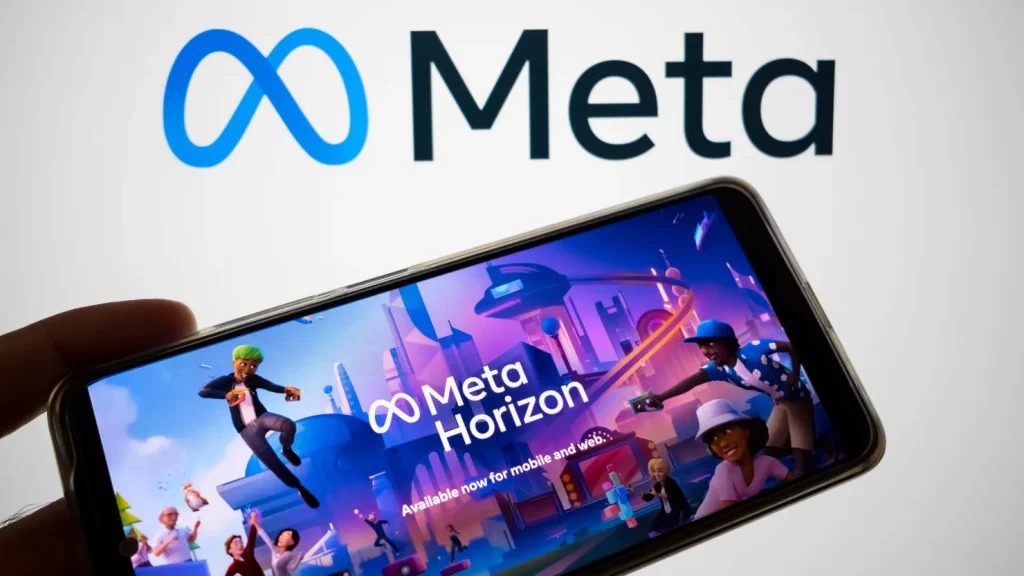
Meta has announced the shutdown of its flagship social VR platform, Horizon Worlds, following a reported $80 billion cumulative loss in its Reality Labs division. This decision marks a significant retreat from the “metaverse-first” strategy, forcing XR developers to pivot toward hardware-centric and open-platform ecosystems.
The Problem Being Solved
Since its rebranding in 2021, Meta sought to solve the “killer app” problem for VR by building a centralized, first-party social ecosystem. The goal was to create a unified virtual space where work, play, and commerce could coexist, providing a default destination for Quest headset users.
However, the platform struggled with “retention friction”—the inability to keep users returning after the initial novelty wore off. Despite massive investment, the gap between the vision of a persistent digital universe and the reality of low-concurrency, “empty” virtual worlds remained unbridged, leading to an unsustainable burn rate that exceeded the platform’s commercial value.
What They Built
Horizon Worlds was built as a proprietary, “walled garden” social platform utilizing Meta’s internal spatial engine. It featured simplified world-building tools designed for creators without traditional coding skills, using a visual scripting system to define object behaviors and environment interactions.
Technically, the platform attempted to solve massive multi-user synchronization and avatar persistence across mobile and VR hardware. It relied on a “hub-and-spoke” architecture where users navigated through a central plaza to reach community-generated “islands.” The system was meant to scale alongside Meta’s hardware, acting as the primary software layer for the Quest ecosystem.
What the Results Show
The shutdown is driven by stark financial and engagement metrics reported by multiple outlets. Internal reports suggest Meta’s Reality Labs division reached a record loss of $80 billion since its inception. While specific user numbers for 2026 are not public, previous benchmarks showed a failure to meet the 280,000 monthly active user target in 2022, with trends continuing downward.
The financial pressure led to a market valuation drop that forced a “year of efficiency” to extend indefinitely. The results indicate that a centralized, first-party social meta-layer is not yet a viable standalone product for a mass-market audience, despite the $10 billion-plus annual R&D spend.
Why This Matters for XR and Spatial Computing
For independent XR developers, the sunsetting of Horizon Worlds signals a shift away from “walled garden” ecosystems. Developers should prioritize cross-platform, engine-agnostic applications (like those built on OpenXR) rather than tethering their content to a single manufacturer’s social layer.
In the realm of social VR and world-building, this move creates a vacuum that decentralized platforms or niche, high-fidelity environments may fill. Practitioners should look toward “interoperable assets” that can move between different virtual spaces, rather than assets locked into one platform’s proprietary scripting language.
For enterprise and industrial XR, Meta’s pivot suggests a refocus on hardware utility. This means headsets will likely be marketed more as “productivity peripherals” for specific tasks—like spatial design or remote training—rather than all-in-one social gateways. Developers should align their roadmaps with utility-based spatial computing rather than general-purpose social hubs.
The Practical Limitation Worth Noting
The primary limitation exposed by this shutdown is the “social density” threshold. A virtual world requires a critical mass of active users to feel lived-in; without it, the high latency and technical overhead of VR become a barrier rather than an incentive. Meta’s exit from the first-party social space suggests that the industry has not yet found a way to make persistent 3D social spaces as frictionless or essential as 2D mobile apps.
Citation
Lovelace, B., & Vanian, J. (2026, March 18). Meta to shut down Horizon Worlds as metaverse losses hit $80 billion. CNBC. https://www.cnbc.com/2026/03/18/meta-horizon-worlds-metaverse-vr.html